
Health guide
Staying fit on board
A ship is a hard place to stay fit. But a fit crew works safer, sleeps better and gets well faster. You do not need a gym to get there.
The short version
- Aim for 150 to 300 minutes of moderate activity a week.
- Do strength work on 2 or more days a week.
- A 20-minute routine with no equipment is enough to start.
- Never exercise alone in a closed space or on deck in heavy weather.
- Chest pain during exercise is an emergency.
We wrote this from the sources at the end. Last checked . We're looking for a doctor to review every page. How we write. Spot a mistake? Tell us.
Why fitness matters more at sea
Life on board is mostly sitting, standing and climbing ladders in short bursts. Over a long contract you can lose strength. Your waist can grow and your back can get stiff. But the job still asks for real effort. You handle mooring lines, carry stores, climb into tanks and must move fast in an emergency.
Regular activity lowers the risk of heart disease, type 2 diabetes and high blood pressure. These are also common reasons a seafarer is found unfit at a medical. Staying active helps you keep your certificate.
How much exercise do you need?
The World Health Organization says adults should do:
- 150 to 300 minutes of moderate activity a week, such as brisk walking or a bike trainer. Or do 75 to 150 minutes of hard activity, such as running, skipping or circuits.
- Strength work on 2 or more days a week.
- Less sitting. Any movement is better than none.
That is about 25 minutes a day. Split it into two blocks around your watch if that is easier.
A 20-minute routine that needs no equipment
Do each move for 40 seconds. Rest for 20 seconds. Go round 3 to 4 times. Pick a flat, dry, clear space. Hold on to something fixed when the ship is rolling.
Squats
Or stand up from a chair and sit down again.
Push-ups
Do them against a bulkhead or table if the floor is too hard.
Lunges
Step forward and bend both knees. Change legs each time.
Plank
Hold your body straight on your elbows and toes.
Step-ups
Use the bottom stair of a ladder way. Hold the rail.
Glute bridge
Lie on a mat with knees bent. Lift your hips and lower them.
Make it a crew habit
- Walk the deck when weather and work allow. Agree a safe route with the officer of the watch.
- Count your steps. Most phones do it. Aim to beat last week, not a magic number.
- Run a 30-day challenge in the mess room. Count steps, push-ups or minutes. Put the chart on the notice board.
- Ask the company for a bike trainer, a rowing machine, mats and bands. They are cheap, small and easy to secure.
Safety first
Pick a safe place
Never exercise alone in a closed space. Never exercise on an open deck in heavy weather or near moving machinery. Warm up and drink water.
If you feel dizzy or very short of breath, stop. Tell the officer in charge of medical care.
Chest pain is an emergency
If you get chest pain or tightness, stop and sit down. Alert the master or the officer in charge of medical care at once. Get radio medical advice straight away. See heart health for the warning signs.
Common questions
How can I exercise on a ship with no gym?
You can do a full workout with your own body weight. Squats, push-ups, lunges, planks and step-ups need only a small, clear space. Twenty minutes is enough to start.
How much exercise do seafarers need each week?
Aim for 150 to 300 minutes of moderate activity a week, plus strength work on 2 days. That is the WHO target for all adults. It works out to about 25 minutes a day.
Is it safe to exercise when the ship is rolling?
It can be, if you are careful. Use a flat, dry space and hold on to something fixed. Skip jumping moves in a big sea. Never train on an open deck in heavy weather.
Can being unfit stop me passing my medical?
Yes, it can. The doctor checks that you can do your emergency duties, such as wearing breathing apparatus. Weight and blood pressure problems are also common reasons for a restricted certificate. See medical certificates.
Quick self-check
Tick what is true for you. Your answers stay on this phone.
Want a monthly all-round check on paper? Get the Fit on Board self-check (PDF, 29 KB).

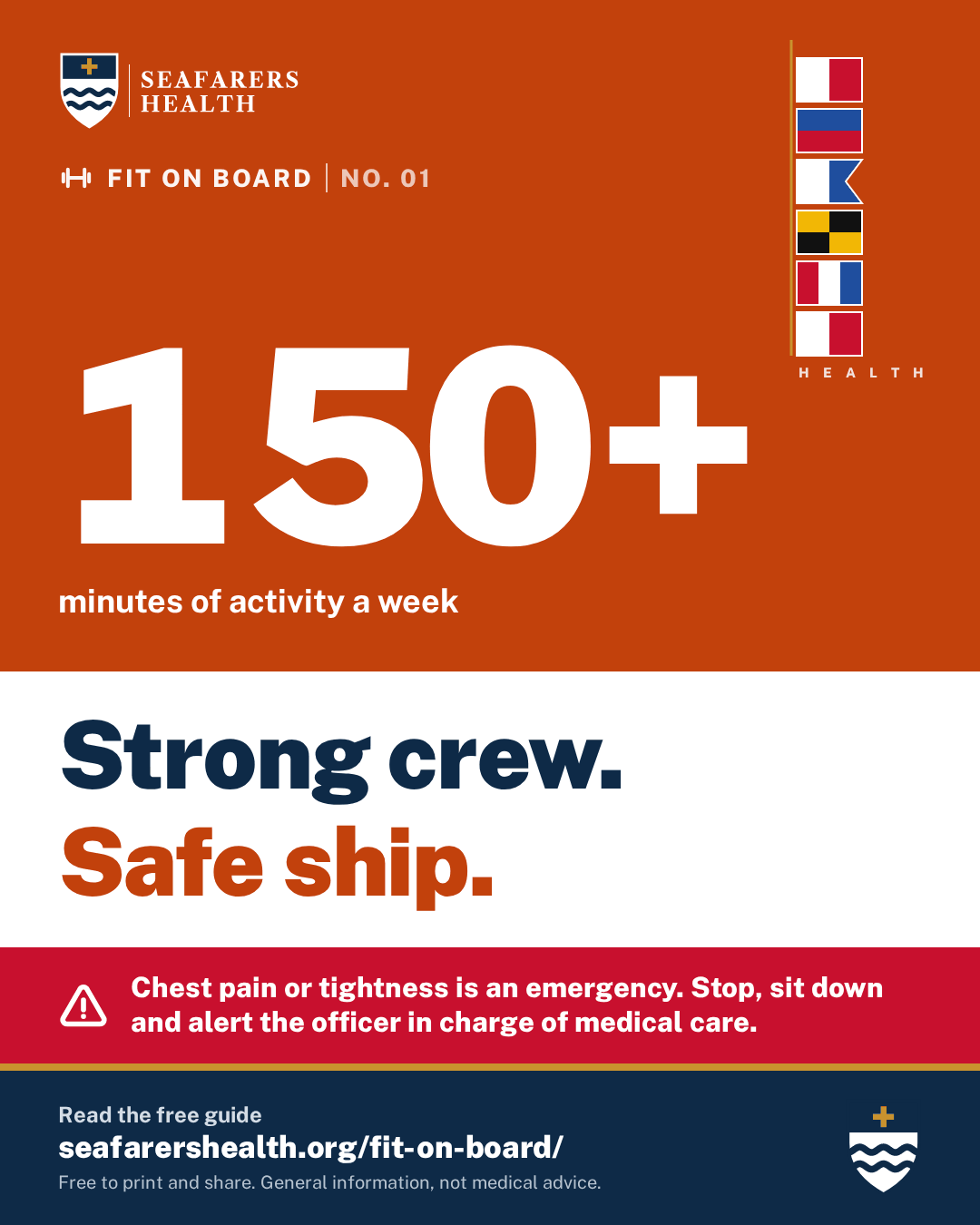
Poster for the mess room
Free to print and share. Pin it up this week.
Sources
Know a shipmate who might need this? Send them this guide. It is free and it loads on slow ship internet.
Send on WhatsAppDid this help you?
Thank you. Please send it to a shipmate who might need it.
Thank you. What was missing? Tell us and we will improve it.
Seafarers Health. seafarershealth.org/fit-on-board/ Last updated 15 November 2026. General information, not medical advice. Free to print and share.