
Health guide
Eating well at sea
Ship food can be very good, and there is often a lot of it. Three big meals a day plus snacks on watch is how many seafarers come home heavier. Eating well at sea is about balance, not dieting.
The short version
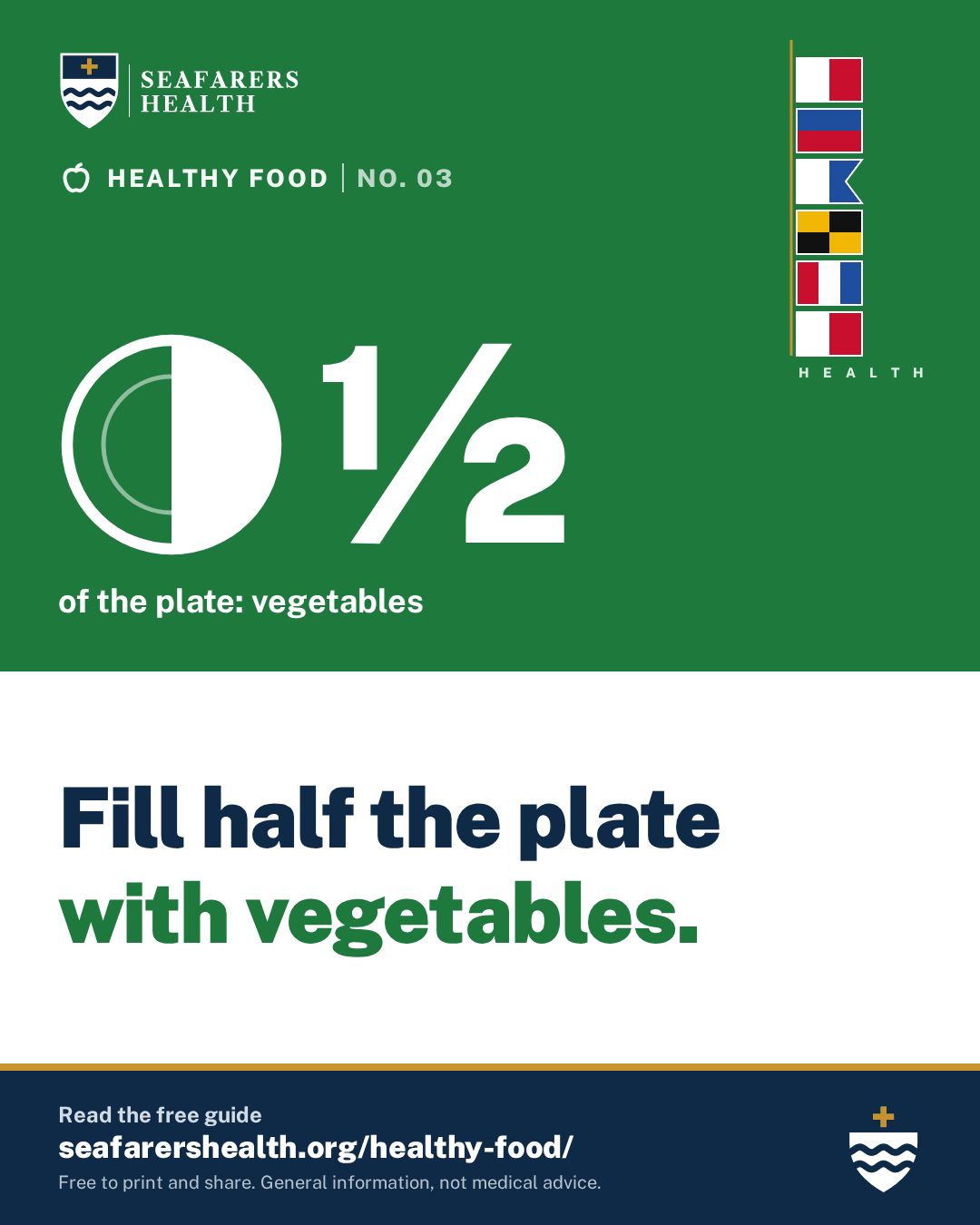
- Fill half your plate with vegetables and fruit.
- Eat at least 400 g of fruit and vegetables a day.
- Keep salt under 5 g a day, about one teaspoon.
- Make water your main drink.
- Frozen and tinned vegetables still count.
We wrote this from the sources at the end. Last checked . We're looking for a doctor to review every page. How we write. Spot a mistake? Tell us.
The balanced plate
- Half the plate: vegetables and fruit. Frozen and tinned count when fresh runs out.
- A quarter: whole grains or starchy food, such as brown rice, potatoes, bread or pasta.
- A quarter: protein, such as fish, beans, lentils, eggs, chicken or lean meat.
- Water as the main drink.
Numbers worth knowing
From the World Health Organization's healthy diet advice:
- At least 400 g of fruit and vegetables a day. That is about 5 portions.
- Less than 5 g of salt a day. That is about one teaspoon, and it includes the salt already in food.
- Keep free sugars below 10% of what you eat each day. Less is better. One can of sweet fizzy drink can use most of that.
- Choose healthy fats from fish, nuts and vegetable oils over butter, ghee, lard and fried food.
Salt and your blood pressure
Too much salt raises blood pressure. High blood pressure is a common reason seafarers fail a medical. Read more on heart health.
Tips for the mess room
- Night watch snacks are where weight creeps on. Keep fruit, nuts or yoghurt for the watch, not biscuits and noodles.
- Drink water through the day. Drink more in hot engine rooms and on deck in the tropics. Pale yellow pee is the goal.
- Coffee and energy drinks do not replace sleep. Stop them a few hours before you plan to sleep.
- Cooks: offer a salad or vegetable side at every main meal. Grill or bake instead of frying when you can. Put fruit out where people pass.
When the fresh food runs out
Long passages mean fewer fresh stores. Frozen vegetables, tinned fish, beans and dried fruit still give good food value. Ask for a store list with plenty of these before long voyages.
Common questions
How can I eat healthy on a ship?
Fill half your plate with vegetables or fruit at each meal. Add a quarter of whole grains and a quarter of protein. Drink water and keep fruit or nuts for night watch.
How much salt is too much?
More than 5 g a day is too much for adults. That is about one teaspoon in total, including the salt already in bread, sauces, noodles and tinned food.
Do frozen and tinned vegetables count?
Yes, they count. Frozen and tinned vegetables, beans and fish still give good food value when fresh stores run out. Choose tins with less salt and sugar when you can.
What are good snacks for night watch?
Fruit, nuts and yoghurt are good choices. They keep you going without the sugar crash of biscuits and sweets. Drink water too.
Quick self-check
Tick what is true for you. Your answers stay on this phone.
Want a monthly all-round check on paper? Get the Fit on Board self-check (PDF, 29 KB).

Poster for the mess room
Free to print and share. Pin it up this week.
Sources
Know a shipmate who might need this? Send them this guide. It is free and it loads on slow ship internet.
Send on WhatsAppDid this help you?
Thank you. Please send it to a shipmate who might need it.
Thank you. What was missing? Tell us and we will improve it.
Seafarers Health. seafarershealth.org/healthy-food/ Last updated 15 November 2026. General information, not medical advice. Free to print and share.