
Health guide
Safe food in the galley
One bad batch from the galley can put half a crew in their bunks, days from a hospital. Food safety is not just the cook's job. Everyone who touches food, stores or the water system has a part.
The short version
- Keep cold food at 5°C or below and hot food above 60°C.
- Do not leave cooked food out for more than 2 hours.
- Cook meat, fish and eggs until the centre reaches 70°C.
- Freezers should be around minus 18°C.
- Anyone with vomiting or diarrhoea stays out of the galley.
We wrote this from the sources at the end. Last checked . We're looking for a doctor to review every page. How we write. Spot a mistake? Tell us.
The five keys to safer food
The World Health Organization sums up food safety in five keys. They fit a ship's galley well.
Keep clean
Wash hands with soap before you touch food, after the toilet and after raw meat, fish or eggs. Keep surfaces, cloths and tools clean. Keep insects, rats and other pests out.
Keep raw and cooked apart
Use separate boards and knives for raw meat and fish. Store raw food below cooked and ready-to-eat food in the fridge, so it cannot drip.
Cook it through
Cook meat, chicken, eggs and seafood until the centre reaches at least 70°C. Use a food thermometer. Heat leftovers until they are steaming hot all the way through.
Keep food cold or hot
Germs grow fastest between 5°C and 60°C. Do not leave cooked food at room temperature for more than 2 hours. Keep hot food above 60°C and cold food below 5°C. Thaw frozen food in the fridge, not on the bench.
Use safe water and food
Use treated water for drinking, washing fruit and making ice. Check dates and the state of stores when they come on board. Wash fruit and vegetables.
Why it is different at sea
- Long gaps between stores mean food is kept longer. Use the oldest stock first.
- Fridges and freezers break down. Check and log the temperatures every day. Fridges should be 0 to 5°C. Freezers should be around minus 18°C.
- Fresh water comes from tanks or the water maker. Tanks need regular cleaning. The water needs treatment and testing.
A sick cook is a risk to everyone
Anyone with vomiting, diarrhoea or an infected cut must stay out of the galley until 48 hours after the last vomiting or diarrhoea, and until they are cleared. Cover any cut with a blue waterproof plaster and gloves, or stay away from food until it heals. Tell the officer in charge of medical care.
Signs of food poisoning on board
Watch for several crew with vomiting, diarrhoea or stomach cramps within a day or two of each other. Report it to the master at once. Keep samples of the food you suspect if you can. Get radio medical advice.
Losing too much water is the main danger. Give oral rehydration salts and plenty of safe drinks in small sips.
Get radio medical advice now if someone
vomits blood, has blood in their diarrhoea, cannot keep any fluid down, is very drowsy or confused, or has signs of losing too much water such as very dark pee or no pee. Alert the master or the officer in charge of medical care.
Common questions
What temperature should a ship's fridge be?
A fridge should be between 0 and 5°C. A freezer should be around minus 18°C. Check and write down both temperatures every day.
How long can cooked food be left out?
No more than 2 hours. After that, put it in the fridge or throw it away. Divide big pots into small containers so they cool faster.
What should we do if several crew get sick after a meal?
Tell the master at once and get radio medical advice. Keep samples of the food if you can. Give the sick crew plenty of fluids in small sips, with oral rehydration salts.
Can a cook with diarrhoea keep working in the galley?
No. Anyone with vomiting or diarrhoea should stay out of the galley until they are cleared. Germs pass easily from hands to food.
Quick self-check
Tick what is true for you. Your answers stay on this phone.
Want a monthly all-round check on paper? Get the Fit on Board self-check (PDF, 29 KB).

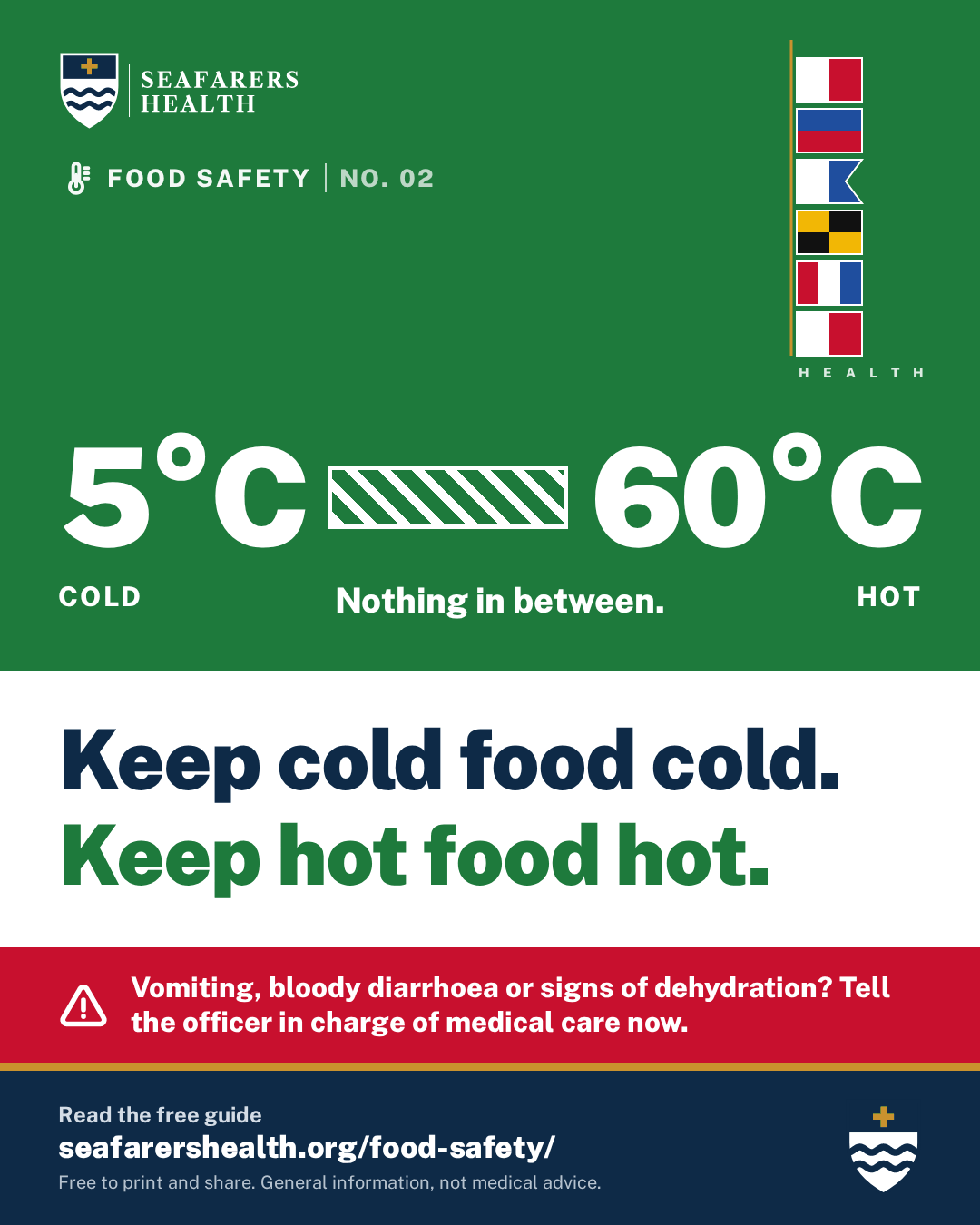
Poster for the mess room
Free to print and share. Pin it up this week.
Sources
Know a shipmate who might need this? Send them this guide. It is free and it loads on slow ship internet.
Send on WhatsAppDid this help you?
Thank you. Please send it to a shipmate who might need it.
Thank you. What was missing? Tell us and we will improve it.
Seafarers Health. seafarershealth.org/food-safety/ Last updated 15 November 2026. General information, not medical advice. Free to print and share.