
Health guide
Joining and leaving the ship safely
For many seafarers the hardest part of a contract is getting there. Two or three flights, long waits, and then straight onto a ship and into a watch. Travel is part of the job, and so is arriving fit to work.
The short version
- Check your vaccines for the areas you will trade in.
- Keep your yellow fever card with your seafarer papers.
- Move and flex your legs on long flights.
- If you arrive too tired for a watch, say so.
We wrote this from the sources at the end. Last checked . We're looking for a doctor to review every page. How we write. Spot a mistake? Tell us.
Before you travel
- Vaccines: check you are up to date for the areas you will trade in. Common ones for seafarers include tetanus, hepatitis A and B, typhoid and yellow fever.
- Yellow fever card: some countries ask for proof of vaccination when you arrive. Keep your International Certificate of Vaccination (the "yellow card") with your seafarer papers.
- Medicines: bring enough of any regular medicine for the full contract plus extra. Keep it in the original packs, with a copy of the prescription. See medicines on board.
- Malaria: if your route includes malaria areas, read our malaria guide before you go.
On long flights
- Move: walk the aisle every hour or two. Flex your ankles and calves in your seat. This lowers the risk of blood clots in the legs (DVT).
- Drink water and go easy on alcohol.
Signs of a blood clot after travel
Get medical help fast for pain or swelling in one leg, or chest pain and sudden shortness of breath. On board, alert the officer in charge of medical care and get radio medical advice.
Jet lag and tiredness
Long travel makes you tired. Tiredness slows your reactions and harms your judgment. International rules say the first watch of a voyage must be rested and fit for duty. Get daylight at your new location, eat at local mealtimes, and take a short nap if you must.
Speak up
If you arrive too tired to work safely, tell the officer of the watch or the master before you take a watch. See fatigue and sleep.
Ashore in port
- Go ashore with a shipmate. Tell the ship when you expect to be back.
- Where hygiene is doubtful, drink bottled or treated water and eat food that is freshly cooked and hot.
- Use licensed transport. Keep a copy of the ship's details and the agent's number with you.
Common questions
What vaccines do seafarers need?
It depends on where you trade. Common ones are tetanus, hepatitis A and B, typhoid and yellow fever. A travel clinic can check your route and your records.
How do I avoid blood clots on long flights?
Get up and walk every hour or two, and flex your ankles and calves in your seat. Get help fast for pain or swelling in one leg, or chest pain and shortness of breath.
Do I have to take a watch straight after a long trip?
International rules say the first watch of a voyage must be rested and fit for duty. If you are too tired to work safely, tell the master or the officer of the watch.
Do I need a yellow fever certificate?
Some countries ask for it when you arrive from certain areas. Keep your yellow card with your seafarer papers so you always have it.
Quick self-check
Tick what is true for you. Your answers stay on this phone.
Want a monthly all-round check on paper? Get the Fit on Board self-check (PDF, 29 KB).

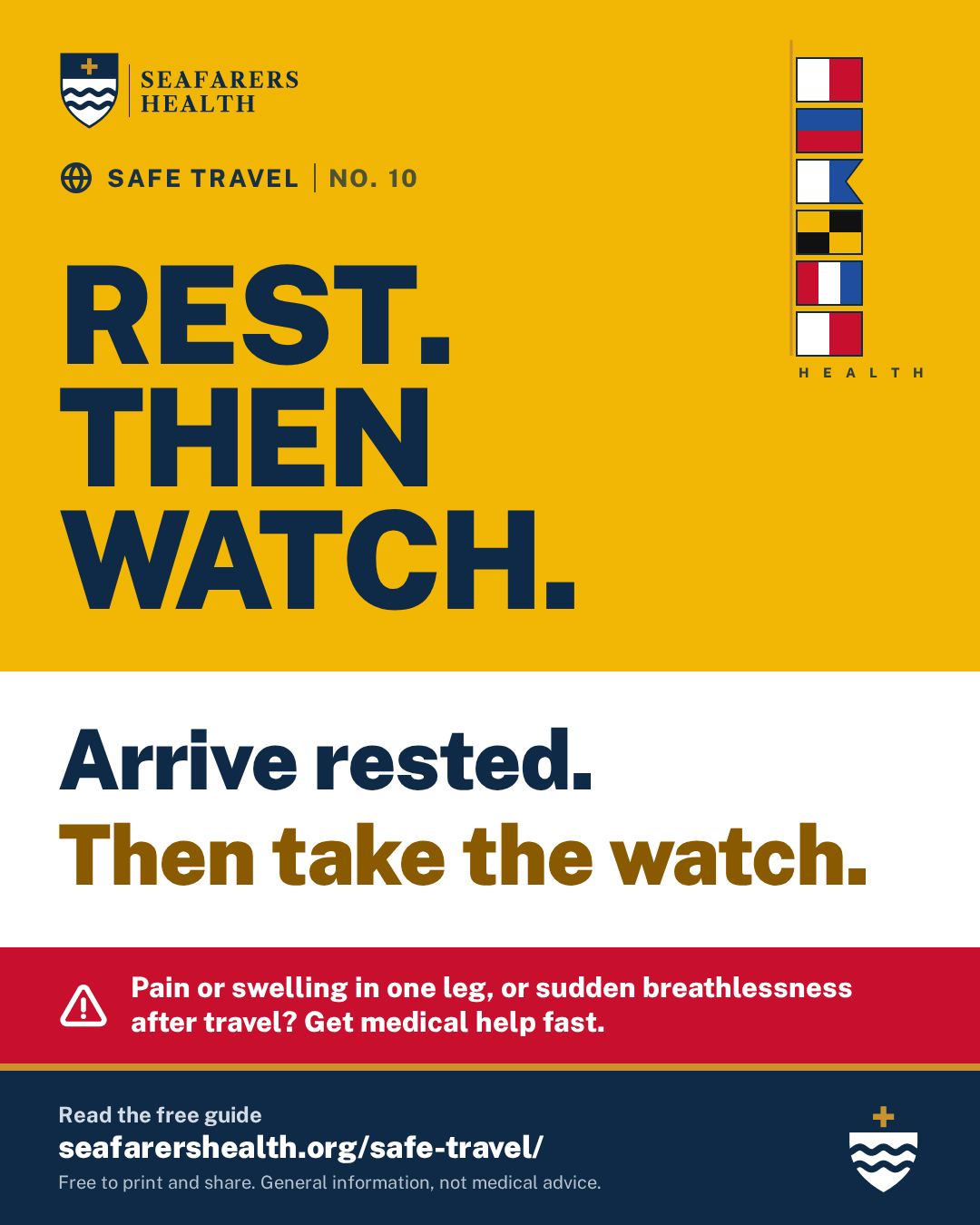
Poster for the mess room
Free to print and share. Pin it up this week.
Sources
Know a shipmate who might need this? Send them this guide. It is free and it loads on slow ship internet.
Send on WhatsAppDid this help you?
Thank you. Please send it to a shipmate who might need it.
Thank you. What was missing? Tell us and we will improve it.
Seafarers Health. seafarershealth.org/safe-travel/ Last updated 15 November 2026. General information, not medical advice. Free to print and share.