
Health guide
Looking after your mind at sea
You can be surrounded by people on a ship and still feel alone. Long contracts, missed family events, poor sleep and pressure at work all take a toll. Looking after your mind is part of the job. Asking for help is a strength.
If you're reading this for yourself, well done. That's a strong first step.
The short version
- In one large survey, 1 in 4 seafarers had signs of depression.
- Sleep, exercise and regular contact with home all help.
- SeafarerHelp is free, private and open 24 hours, in many languages.
- If someone talks about suicide, do not leave them alone.
We wrote this from the sources at the end. Last checked . We're looking for a doctor to review every page. How we write. Spot a mistake? Tell us.
You are not the only one
A 2019 Yale University study for the ITF Seafarers' Trust surveyed 1,572 seafarers. In the two weeks before the survey, 25% had signs of depression and 17% had signs of anxiety. 20% had thoughts of suicide or self-harm. Feeling low at sea is common, and help works.
What wears seafarers down
- Months away from family, with news from home arriving late or not at all
- Tiredness from watches, port work and broken sleep
- Small crews, mixed languages and little time to relax together
- Poor or costly internet
- Pressure, bullying or harassment on board
- Worries about money, contracts or problems at home
Warning signs, in yourself or a shipmate
- Staying away from the mess room and avoiding others
- Sleeping much more or much less than usual
- Getting angry, tearful or snapping at people
- Drinking more, or losing interest in things they used to enjoy
- Talking about feeling hopeless, being a burden, or not wanting to go on
What helps
- Protect your sleep. Aim for at least 7 hours in each 24. Keep the cabin dark, cool and quiet. See fatigue and sleep.
- Stay in touch with short, regular messages home rather than rare long calls.
- Move every day. Exercise is one of the best tools for mood.
- Eat together when you can. Plan a film night, a barbecue or a quiz.
- Talk. Talk to a shipmate, an officer you trust, or a free helpline.
Free, private help, 24 hours a day
SeafarerHelp is a free, private helpline for seafarers and their families. It is run by the seafarers' charity ISWAN. It is open 24 hours a day, every day of the year. You can call, use WhatsApp, email or live chat. The team speaks English and many other languages. Phone: +44 20 7323 2737. Website: iswan.org.uk/seafarerhelp. We are not connected to ISWAN. We link to them because they help.
If someone talks about suicide
Ask them directly: "Are you thinking about killing yourself?" Asking does not put the idea in their head. Listen without judging.
- Do not leave them alone, day or night.
- Keep them away from open decks and rails.
- Lock the medicine chest. Take away their own tablets, ropes and sharp tools.
- Alert the master or the officer in charge of medical care at once.
- Get radio medical advice and say it is a suicide risk. The doctor may advise evacuation.
Crisis lines
On the ship or in any port: SeafarerHelp, free and 24 hours, +44 20 7323 2737. You can also ask them to call you back at iswan.org.uk/seafarerhelp.
At home: free national lines. Most short numbers only work on a phone network in that country.
- Philippines: NCMH Crisis Hotline 1553. Government, 24 hours.
- India: Tele-MANAS 14416. Government, 24 hours, many languages.
- Indonesia: Healing119, call 119 then press 8. Government.
- China: 12356. Government.
- United States: call or text 988. 24 hours.
- United Kingdom: Samaritans 116 123. Free, 24 hours.
- Poland: 800 70 2222. 24 hours.
- Latvia: 116 123. 24 hours.
Other countries: findahelpline.com lists checked lines in over 175 countries.
Bullying or harassment
You have the right to complain on board and to the master. You can also talk to SeafarerHelp in private.
Common questions
Where can seafarers get free mental health help?
SeafarerHelp is free, private and open 24 hours a day, every day. You can phone +44 20 7323 2737, or use WhatsApp, email or live chat. It also helps families.
What are the signs a shipmate is struggling?
The common signs are staying alone, sleeping much more or less, snapping at people, drinking more and talking about feeling hopeless. Ask them how they really are, and listen.
What should I do if a crewmate talks about suicide?
Stay with them and alert the master or the officer in charge of medical care at once. Get radio medical advice. Ask open questions and listen. Take what they say seriously.
How common is depression among seafarers?
It is common. In a 2019 Yale study of 1,572 seafarers, 25% had signs of depression in the two weeks before the survey. You are not alone, and help works.
Can families of seafarers call SeafarerHelp?
Yes. SeafarerHelp is for seafarers and their families. It is free and private, and open 24 hours a day. See our page for families at home.
Quick self-check
Tick what is true for you. Your answers stay on this phone.
Want a monthly all-round check on paper? Get the Fit on Board self-check (PDF, 29 KB).

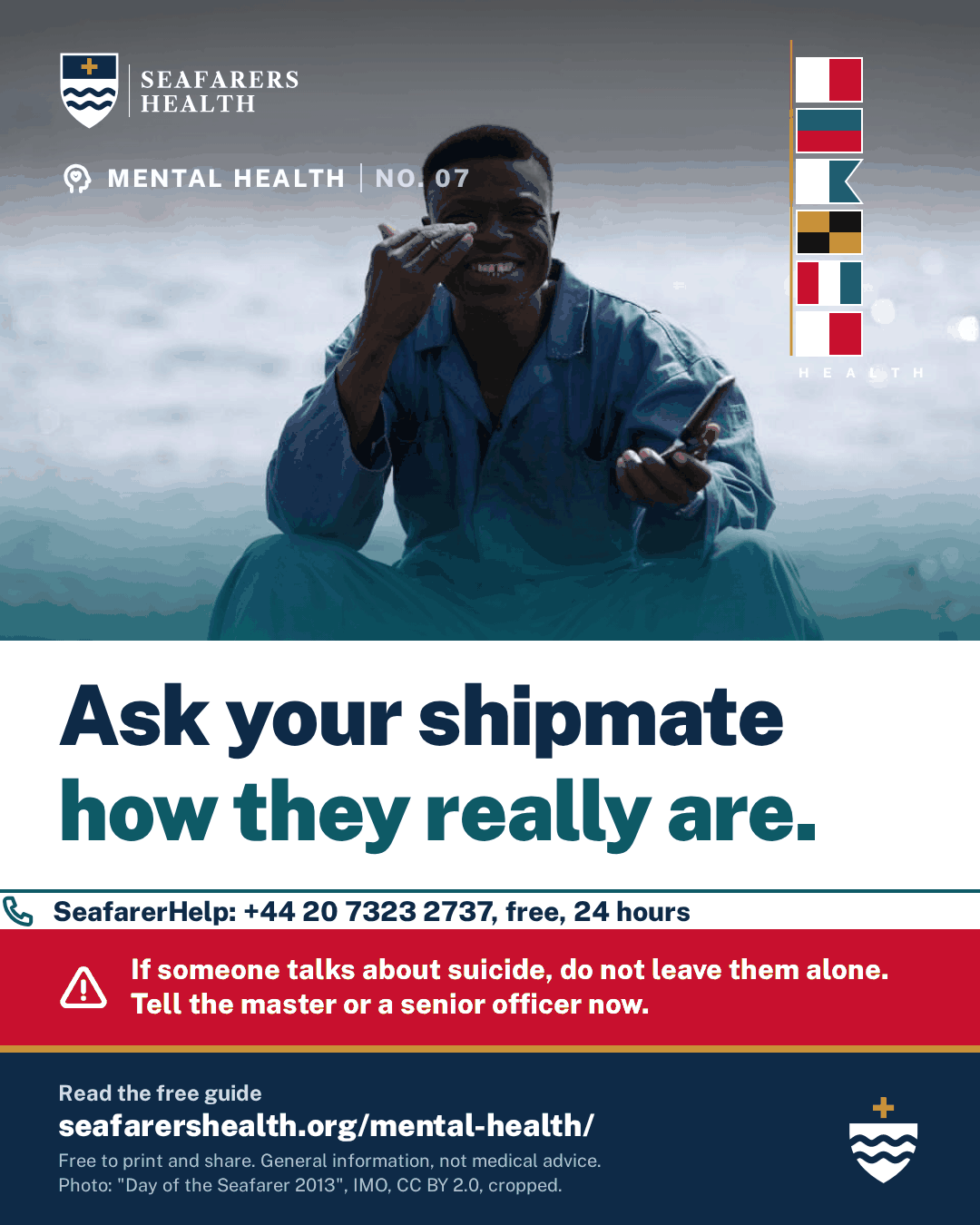
Poster for the mess room
Free to print and share. Pin it up this week.
Sources
Know a shipmate who might need this? Send them this guide. It is free and it loads on slow ship internet.
Send on WhatsAppDid this help you?
Thank you. Please send it to a shipmate who might need it.
Thank you. What was missing? Tell us and we will improve it.
Seafarers Health. seafarershealth.org/mental-health/ Last updated 15 November 2026. General information, not medical advice. Free to print and share.