
Health guide
Your heart and blood pressure
At sea you can be days from a hospital. That makes a healthy heart part of a safe job. High blood pressure is common, has no signs for most people, and can be treated.
Most heart problems give warnings first. Here is how to spot them and stay fit for work.
The short version
- High blood pressure usually has no signs. The only way to know is to get it checked.
- A reading of 140/90 or higher at a clinic counts as high.
- Treated, well-controlled blood pressure does not usually stop you working at sea.
- Keep salt under 5 g a day, about one teaspoon.
- Chest pain is an emergency. Alert the master and get radio medical advice.
We wrote this from the sources at the end. Last checked . We're looking for a doctor to review every page. How we write. Spot a mistake? Tell us.
Why your heart matters more at sea
On a ship there is no ambulance to call. The crew must give first care while a doctor advises by radio. So it pays to keep your heart healthy and to know the warning signs.
High blood pressure is very common. WHO says about 1.4 billion adults aged 30 to 79 had it in 2024. About 44% of them did not know. It raises the risk of heart attack, stroke and kidney disease.
Know your numbers
Blood pressure is written as two numbers, such as 130/80. You usually have high blood pressure if your reading is:
- 140/90 or higher when a nurse or doctor checks it
- 135/85 or higher when you check it at home
Most people with high blood pressure feel nothing. Get it checked at least once before every contract. Ask for your numbers and write them down.
Very high readings
Very high blood pressure can cause bad headaches, blurred vision, chest pain, dizziness or trouble breathing. If you have these signs, tell the officer in charge of medical care at once.
Passing your medical with high blood pressure
High blood pressure that is treated and under control does not usually stop you working at sea. Flag states set their own rules. Many use the ILO/IMO guidelines on seafarer medicals. In general terms, these guidelines say:
- If your blood pressure is treated and under control, with no side effects that stop you working, you can usually be fit for all duties.
- If it is above 160/100, you may be found unfit for a time, until it is checked and treated.
- If it stays above 160/100 even with treatment, you may be found unfit for sea service.
- You may get a shorter certificate so the doctor can check you more often.
Get checked early
See a doctor a few months before your medical, not the week before. Treatment takes time to work.
Take your tablets every day
Do not stop them to try to pass. Stopping can be dangerous.
Bring your records
Take your readings, your prescription and a letter from your doctor to the exam.
Cut salt and alcohol
Less salt and less alcohol help lower blood pressure. So does losing weight and being active.
Read more about the exam on our medical certificates page.
The warning signs of a heart attack
- Chest pain that feels like crushing, squeezing or pressure. It may spread to the arm, neck, jaw, back or stomach.
- Feeling short of breath
- Feeling sick or being sick
- A burning feeling like bad indigestion
- Sweating
- Pale, grey or blue skin or lips
Chest pain is an emergency
Stop all work. Help the person sit or rest on the floor with knees bent and back supported. Alert the master or the officer in charge of medical care at once. Get radio medical advice straight away. The radio doctor may advise aspirin from the medicine chest. If the person stops breathing, start CPR.
The warning signs of a stroke
Remember FAST:
- Face: one side droops, or they cannot smile.
- Arms: they cannot lift both arms and keep them up.
- Speech: words are slurred or confused.
- Time: get help at once.
A stroke is an emergency
Alert the master or the officer in charge of medical care and get radio medical advice at once. Do this even if the signs go away.
What you can do for your heart
Salt
Keep salt under 5 g a day. That is about one teaspoon, and it includes the salt already in food. Noodles, soy sauce, tinned meat and snacks hold a lot. Taste food before you add salt.
Smoking
Tobacco harms your heart and blood vessels. Quitting helps fast. One year after you stop, your risk of heart disease is about half that of a smoker. Ask a doctor at home about help to quit before you join.
Shift work
A large review of 34 studies linked shift work to a higher risk of heart attack. You cannot change your watch. But you can protect your sleep, eat regular meals and stay active. See fatigue and sleep.
Move and eat well
Aim for 150 minutes of activity a week. Fill half your plate with vegetables. See Fit on Board and healthy eating.
Common questions
Can I pass my seafarer medical with high blood pressure?
Yes, usually, if it is treated and under control. Under the ILO/IMO guidelines, treated blood pressure with no side effects that stop you working is usually fit. Flag rules vary, so get checked and treated well before your exam.
What blood pressure is too high for a seafarer medical?
Under the ILO/IMO guidelines, a reading above 160/100 usually means you are unfit for a time until it is treated. If it stays that high with treatment, you may be found unfit. Your flag state may set its own limits.
Does high blood pressure have symptoms?
Usually not. Most people with high blood pressure feel fine. The only way to know is to have it measured.
What are the warning signs of a heart attack?
The main sign is chest pain that feels like squeezing or pressure, which may spread to the arm, neck or jaw. Shortness of breath, sweating and feeling sick are also common. At sea, alert the master and get radio medical advice at once.
How can I lower my blood pressure before my medical?
Start months ahead. Take any tablets you are prescribed every day, cut salt and alcohol, stop smoking and stay active. Do not stop your tablets to try to pass.
Quick self-check
Tick what is true for you. Your answers stay on this phone.
Want a monthly all-round check on paper? Get the Fit on Board self-check (PDF, 29 KB).

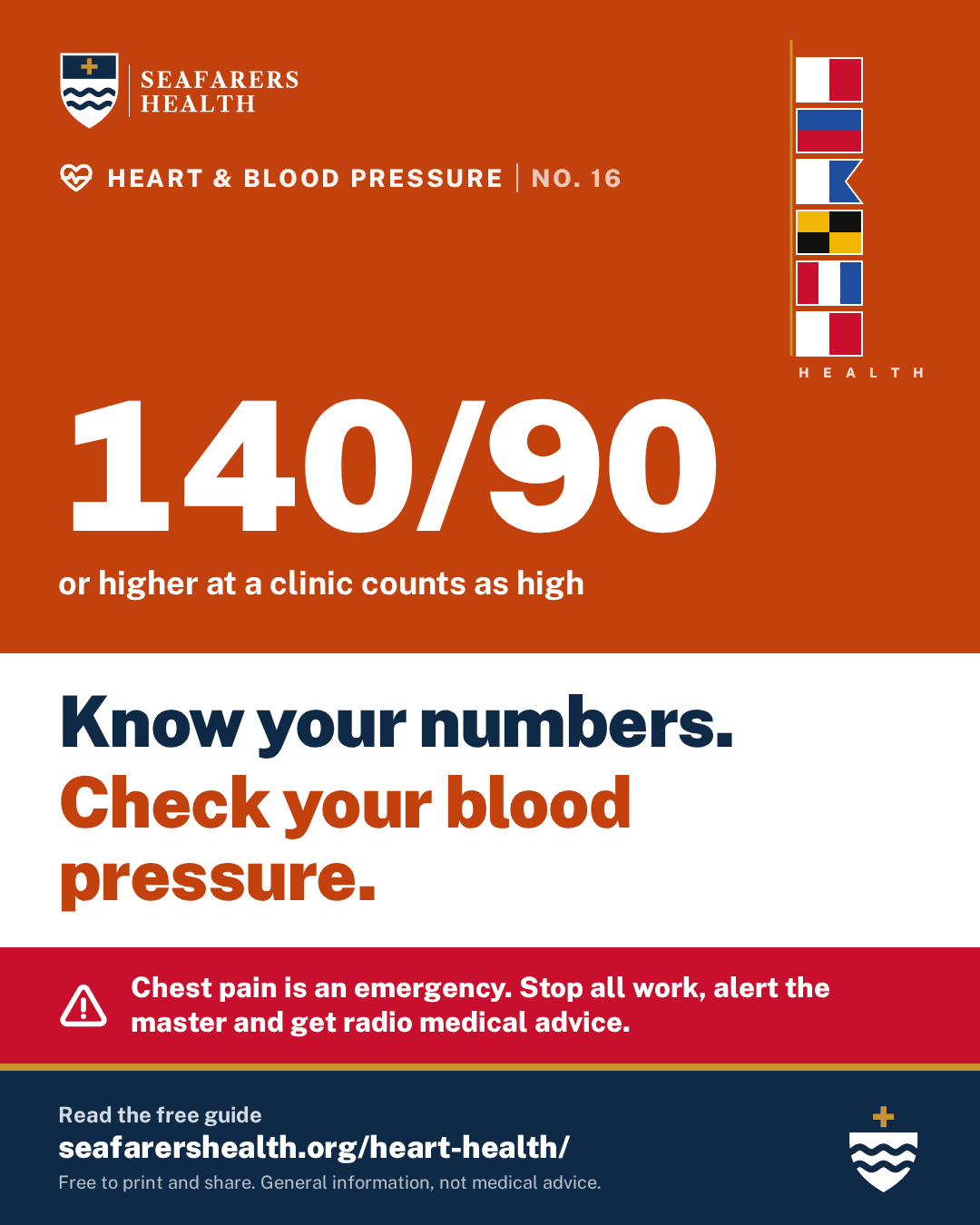
Poster for the mess room
Free to print and share. Pin it up this week.
Sources
- WHO Hypertension fact sheet (checked 2026-11-15)
- NHS: High blood pressure (checked 2026-11-15)
- NHS: Heart attack (checked 2026-11-15)
- NHS: Stroke symptoms (checked 2026-11-15)
- ILO/IMO Guidelines on the medical examinations of seafarers, Appendix E (hypertension) (checked 2026-11-15)
- WHO Sodium reduction fact sheet (checked 2026-11-15)
- WHO: Health benefits of smoking cessation (checked 2026-11-15)
- Vyas and others, Shift work and vascular events, BMJ 2012 (checked 2026-11-15)
Know a shipmate who might need this? Send them this guide. It is free and it loads on slow ship internet.
Send on WhatsAppDid this help you?
Thank you. Please send it to a shipmate who might need it.
Thank you. What was missing? Tell us and we will improve it.
Seafarers Health. seafarershealth.org/heart-health/ Last updated 15 November 2026. General information, not medical advice. Free to print and share.