
Health guide
Sun, heat and your skin
On deck the sun hits you twice, from above and again off the water. In the engine room the heat can make you ill. Oils, fuels and wet work add their own damage to your skin.
The short version
- Use SPF 30 or higher and put it on again every 2 hours.
- Cloudy days still burn.
- Heatstroke is an emergency. Cool the person and get help.
- Check your skin once a month for new or changing spots.
- Wash oils off quickly with mild soap, never fuel or solvent.
We wrote this from the sources at the end. Last checked . We're looking for a doctor to review every page. How we write. Spot a mistake? Tell us.
Sun protection on deck
- Cover up. Wear long sleeves, long trousers, a hat with a brim or neck flap, and wraparound sunglasses.
- Use sunscreen. Choose broad spectrum, SPF 30 or higher. Put it on all bare skin 15 to 30 minutes before going out. Put more on at least every 2 hours, and after sweating or getting wet.
- Do not forget ears, neck, the back of the hands, lips and the top of the head. Use a lip balm with SPF.
- Plan heavy deck work outside the hours of strongest sun when you can. The sun is usually strongest around midday.
- Cloudy days still burn. UV passes through cloud.
If you get sunburnt
Get out of the sun. Cool the skin with a cool shower or damp towel. Drink plenty of water. Use a plain moisturiser or after-sun. Do not pop blisters. Cover the skin until it heals.
Bad sunburn
Tell the officer in charge of medical care if the skin is blistered or swollen, or you feel hot and shivery, dizzy, sick or very tired. Bad sunburn can lead to heat illness.
Heat in the engine room and on deck
Heat exhaustion starts with tiredness, dizziness, headache, feeling sick, heavy sweating, cramps and great thirst. Act fast.
Move to a cool place
Get the person out of the heat and lie them down.
Take off extra clothes
Remove overalls, jackets and socks.
Give fluids
If they are awake and can swallow, give plenty of water, or oral rehydration salts mixed with water.
Cool the skin
Spray or sponge with cool water and fan them.
They should feel better within 30 minutes.
Heatstroke is an emergency
Treat it as heatstroke if the person has a temperature of 40°C or more, hot skin, fast breathing, confusion, a fit, or passes out. Also treat it as heatstroke if heat exhaustion is not better after 30 minutes.
- Alert the master and get radio medical advice at once.
- Cool them fast. Soak them all over with cold water and fan hard.
- Put ice or cold packs in a cloth on the neck, armpits and groin.
- Do not give drinks if they are confused or drowsy.
- If they pass out, put them on their side.
Skin problems from work
Oils, fuels, cleaning chemicals, cement and wet work can cause dermatitis. This is red, dry, itchy, cracked skin, usually on the hands.
- Wear the right gloves for the job. Change them when they are damaged.
- Wash off oil and chemicals quickly with mild soap, not solvents or fuel.
- Dry your hands well and use a moisturising cream after work.
- Report a rash that will not go away. Catching dermatitis early stops it becoming long-term.
Fungal infections and heat rash
Heat, sweat and wet work clothes make fungal infections and heat rash very common at sea.
- Fungal infection (ringworm, athlete's foot) shows as itchy, ring-shaped or scaly patches. It often appears in the groin, feet, armpits or under the belt. It can also cause pale or dark patches on the chest and back.
- Heat rash (prickly heat) shows as tiny itchy bumps where sweat cannot escape.
- Shower after work. Dry well between the toes and in skin folds. Change into dry cotton clothes and socks every day.
- Do not share towels or work boots. Wear sandals in shared showers.
- Antifungal cream from the medicine chest usually clears fungal infections. Use it as the officer in charge of medical care advises. Get radio medical advice if it spreads, weeps or does not get better.
Check your skin for cancer
Once a month, look over your skin. Use a mirror, or ask a shipmate to check your back. See a doctor at the next chance about any mole or spot that is new, changing, bleeding or itchy, or that looks different from the others. Use the ABCDE guide:
- Asymmetry: the two halves do not match
- Border: the edge is ragged or blurred
- Colour: more than one colour
- Diameter: wider than 6 mm
- Evolving: it is changing
If you have darker skin, skin cancer is less common but is often found later. It tends to appear on the soles of the feet, the palms, under the nails (a dark stripe in a nail) and inside the mouth. Check those places too.
Common questions
What SPF sunscreen should seafarers use?
Use broad spectrum SPF 30 or higher. Put it on before you go out and again at least every 2 hours, and after sweating or getting wet. Cover up as well.
What are the signs of heatstroke?
Hot skin that is not sweating, a very high temperature, fast breathing, confusion, fits or passing out are signs of heatstroke. It is an emergency. Cool the person and get radio medical advice at once.
How do I treat an itchy rash in the groin or feet?
It is often a fungal infection. Keep the area clean and dry and change into dry cotton clothes daily. Ask the officer in charge of medical care for antifungal cream from the medicine chest.
How do I check a mole for skin cancer?
Use the ABCDE guide: a mole that is uneven, has a ragged edge, has more than one colour, is wider than 6 mm or is changing. Show any such mole to a doctor at the next chance.
Quick self-check
Tick what is true for you. Your answers stay on this phone.
Want a monthly all-round check on paper? Get the Fit on Board self-check (PDF, 29 KB).

Poster for the mess room
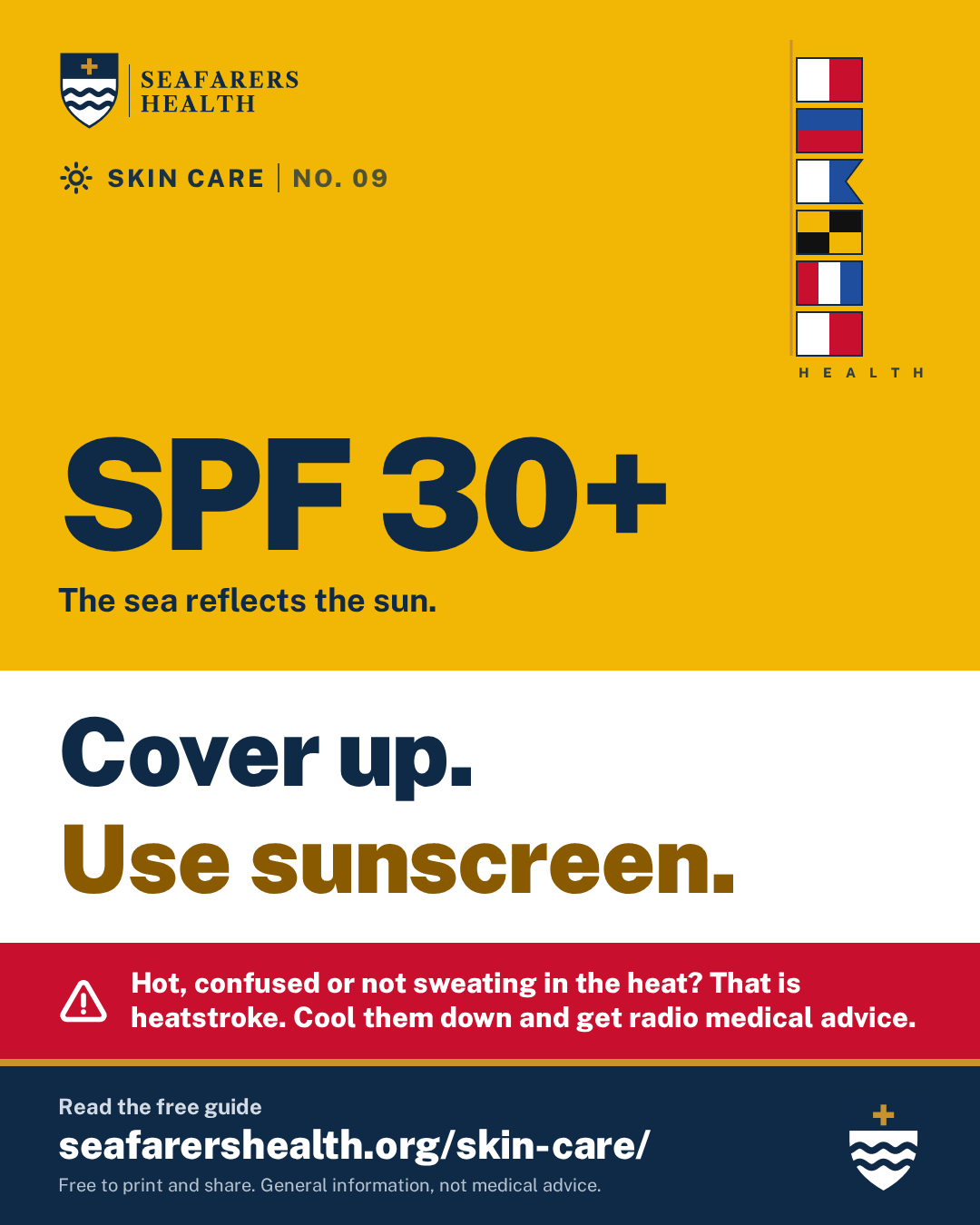
Free to print and share. Pin it up this week.
Sources
Know a shipmate who might need this? Send them this guide. It is free and it loads on slow ship internet.
Send on WhatsAppDid this help you?
Thank you. Please send it to a shipmate who might need it.
Thank you. What was missing? Tell us and we will improve it.
Seafarers Health. seafarershealth.org/skin-care/ Last updated 15 November 2026. General information, not medical advice. Free to print and share.